Sleep Apnea
Prevent Deadly Health Problems
Get Real Relief From Sleep Apnea in the Hudson Valley
Restful, uninterrupted sleep can start with a conversation. For patients of record, our team screens for signs of sleep apnea in the Hudson Valley during regular dental checkups. If needed, we can provide a custom oral appliance designed to keep your airway open through the night.
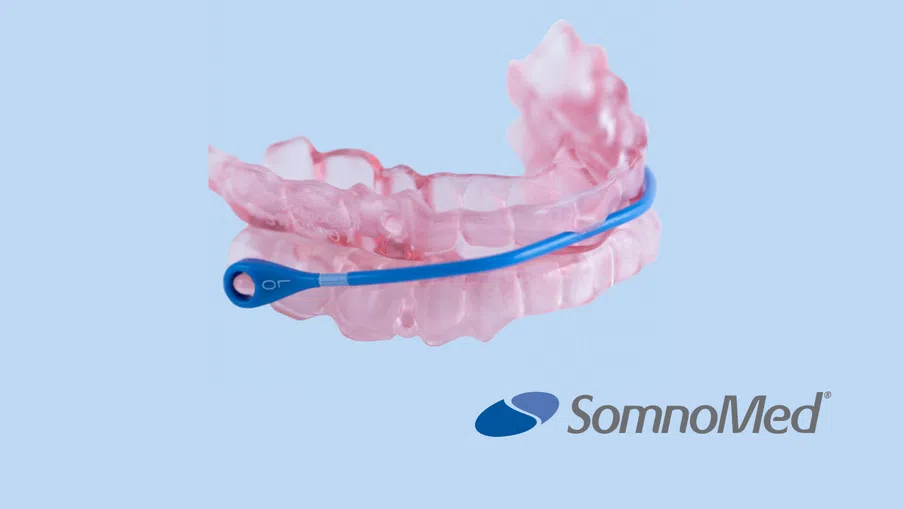
A custom appliance repositions your jaw slightly forward, helping keep your airway open while you sleep. This treatment is generally more comfortable than a CPAP machine and less disruptive to you and your partner. The appliance also travels easily without cords, hoses, or extra equipment to pack.
See How Sleep Apnea Treatment Improves Your Rest
Improved Sleep Quality
Keeping your airway open through the night reduces the pauses in breathing that disrupt deep sleep. You'll wake up feeling more rested and alert.
Reduced Snoring
Repositioning your jaw slightly forward opens your airway, which often reduces or eliminates the loud snoring that can disturb both you and your partner.
Travel-Friendly Design
The appliance is small, lightweight, and doesn't require electricity, cords, or a hose. This makes it easy to pack and use while traveling.
Comfortable Fit
Each appliance is fitted to your bite and mouth, so it stays in place through the night without the bulk and noise of CPAP treatment.
Learn What Sleep Apnea Therapy Involves
Screening for sleep apnea often happens during your routine hygiene appointment, since signs like teeth grinding, jaw tension, or a reported pattern of daytime fatigue can point toward a breathing issue during sleep. Your dentist can flag these signs even if you haven't mentioned sleep problems directly, since many patients don't connect them to their oral health.
If your symptoms suggest obstructive sleep apnea, a sleep study with an outside provider is recommended to confirm the diagnosis and its severity. Once results come back, a custom SomnoMed oral appliance can be fitted to reposition your jaw and keep your airway open overnight. With a clear airway, you won't experience the frequent interruptions in breathing that affect your sleep. Your overall health is likely to improve too, since sleep apnea has been linked to high blood pressure, stroke, and other conditions.
Ongoing care and appliance adjustments happen at your regular dental visits. Managing your sleep disorder becomes part of the checkups you already have scheduled rather than a separate appointment to arrange.
Get help for sleep apnea in the Hudson Valley by reaching out to our office today.
Frequently Asked Questions About Sleep Apnea
Q What is sleep apnea?
Sleep apnea is a condition where breathing repeatedly stops and starts during sleep, often due to the airway becoming blocked or collapsing. This disrupts deep sleep cycles and can lead to loud snoring, gasping, or choking sounds. Left untreated, it can contribute to fatigue, high blood pressure, and other health concerns over time.
Q What are the symptoms of sleep apnea?
Common symptoms of sleep apnea include loud snoring, pauses in breathing witnessed by a partner, gasping or choking during sleep, and morning headaches that fade by midday hours. Daytime fatigue, difficulty concentrating, irritability, and a dry mouth upon waking are also frequent signs, since interrupted breathing prevents deep, restorative sleep.
Q How is sleep apnea diagnosed?
Sleep apnea is typically diagnosed through a sleep study, which monitors breathing patterns, oxygen levels, and brain activity overnight. This can be done in a sleep lab or, in some cases, with an at-home testing kit. Results determine the severity of the condition and guide which treatment option fits best.
Q What is an oral appliance for sleep apnea?
An oral appliance for sleep apnea is a custom-fitted device worn during sleep that repositions the jaw slightly forward to keep the airway open through the night. Made from durable dental materials, it resembles a mouthguard and is designed using impressions or digital scans of the individual's teeth, gums, and bite alignment.
Q What's the difference between an oral appliance and CPAP?
An oral appliance is a small, custom-fitted device worn in the mouth, while a CPAP machine uses a mask and constant air pressure delivered through a hose to keep the airway open. Oral appliances are often chosen for mild to moderate sleep apnea, while CPAP is typically used for more severe cases.
Q Who is a good candidate for an oral appliance for sleep apnea?
Good candidates for an oral appliance typically have mild to moderate sleep apnea confirmed through a sleep study, along with healthy teeth and gums that can hold the device securely in place. Those who find a CPAP machine uncomfortable, noisy, or difficult to use consistently are also often considered strong candidates.
Q How long does it take to adjust to an oral appliance for sleep apnea?
Adjusting to an oral appliance for sleep apnea typically takes one to two weeks, as the mouth and jaw get used to the new device positioned in place each night. Minor jaw soreness, increased saliva, or temporary bite changes are common at first and usually ease as the mouth adapts to nightly wear.
Q Can sleep apnea affect overall health?
Untreated sleep apnea can affect overall health beyond poor sleep, contributing to high blood pressure, heart problems, and an increased risk of stroke or diabetes over several years of exposure. It has also been linked to daytime drowsiness that raises the risk of accidents, along with mood changes and memory difficulties.


